|
WING CHUN
 WING CHUN Kung Fu is probably the best known of all the Kung Fu styles
and the most widely practised, largely because of the late Bruce Lee
who trained in this devastating Kung Fu system as a youth. Wing Chun
provided a basis for Lee's own electric style - Jeet Kune Do. Many
martial artists believe Wing Chun, the only style created by a woman,
is the most lethal of all the Kung Fu forms and is often referred
to as 'Hong Kong Street Fighting'. Wing Chun is a very practical and
scientific method of combat.
WING CHUN Kung Fu is probably the best known of all the Kung Fu styles
and the most widely practised, largely because of the late Bruce Lee
who trained in this devastating Kung Fu system as a youth. Wing Chun
provided a basis for Lee's own electric style - Jeet Kune Do. Many
martial artists believe Wing Chun, the only style created by a woman,
is the most lethal of all the Kung Fu forms and is often referred
to as 'Hong Kong Street Fighting'. Wing Chun is a very practical and
scientific method of combat.
Wing Chun is the only style created by a woman!
There
are many stories about the birth of Wing Chun,
but the most popular is the story of Buddhist
nun, Ng Mui. It is said she was one of 5
Grandmasters who were developing a system of
fighting that was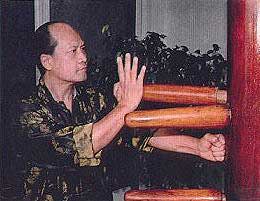 efficient and could be learnt quickly.
While they were developing this system, the
Shaolin Temple was attacked by the soldiers of
the Manchu government something during the
18th century. Ng Mui was lucky enough to
escape and fled to the mountains to seek
refuge. Here she continued her
meditation and Buddhist way of
life.
efficient and could be learnt quickly.
While they were developing this system, the
Shaolin Temple was attacked by the soldiers of
the Manchu government something during the
18th century. Ng Mui was lucky enough to
escape and fled to the mountains to seek
refuge. Here she continued her
meditation and Buddhist way of
life.
One day she witnessed a snake attacking a crane
on the ground. Intrigued, the watched
the battle, being highly impressed by the
cranes ability to continually evade and
counter the attacks of the snake. It is
said that Ng Mui combined the concepts of the
new fighting style developed by herself and
the other Grandmaster and the methods used by
the crane, thus creating a new style.
This was then taught to a young woman named
Yim Wing Chun, after whom the style was
named.
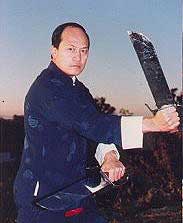
Designed for efficiency, Wing Chun's aim is to neutralise an
attacker the instant an attack is initiated. The art has no superfluous
techniques, nor does it embrace a myriad of different weapons; in fact,
only two weapons are studied by the Wing Chun practitioner - the
Six-and-a-half-point Pole, and the Bart Cham Dao.
Wing
Chun is especially effective at close range,
and as such emphasises the use of the arms
more than the legs. This prevents the
practitioner from being left open to attack
and also helps maintain perfect balance.
 Size
and strength makes little difference to the
Wing Chun practitioner. Rather it is
preferred to reserve ones strength from the
block, and
instead use the opponents momentum against
him. Once this situation control has
been achieved, the Wing Chun practitioner can
use any of a myriad of lethal strikes -
finger jabs, punch, chop, palm strike, grab -
to attack. To ensure that only a minimal
amount of time is wasted, and effort is also
kept to a minimum, the student can learn
to use their defending arm to also initiate an
attack, or even to use both arms
simultaneously. Advanced Wing Chun
students can perform such feats without
evening looking at what they are doing.
This is achieved by much practice of a
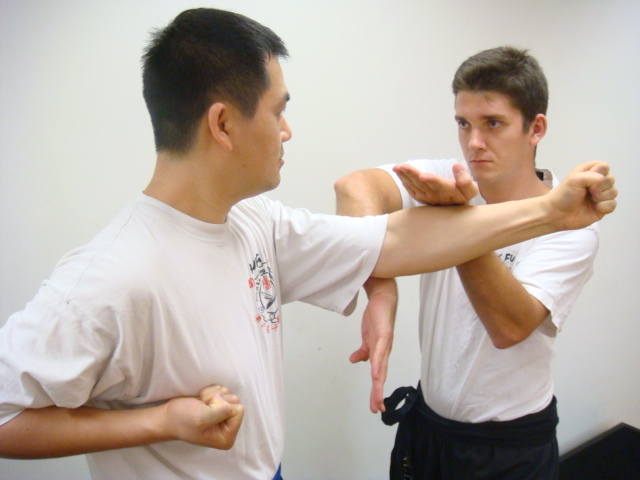
sensitivity-developing exercise for two people
known as Chi Sao, in which the
combatants lock arms and try to feel their
opponents next move and defend and
counterstrike. Size
and strength makes little difference to the
Wing Chun practitioner. Rather it is
preferred to reserve ones strength from the
block, and
instead use the opponents momentum against
him. Once this situation control has
been achieved, the Wing Chun practitioner can
use any of a myriad of lethal strikes -
finger jabs, punch, chop, palm strike, grab -
to attack. To ensure that only a minimal
amount of time is wasted, and effort is also
kept to a minimum, the student can learn
to use their defending arm to also initiate an
attack, or even to use both arms
simultaneously. Advanced Wing Chun
students can perform such feats without
evening looking at what they are doing.
This is achieved by much practice of a
sensitivity-developing exercise for two people
known as Chi Sao, in which the
combatants lock arms and try to feel their
opponents next move and defend and
counterstrike.
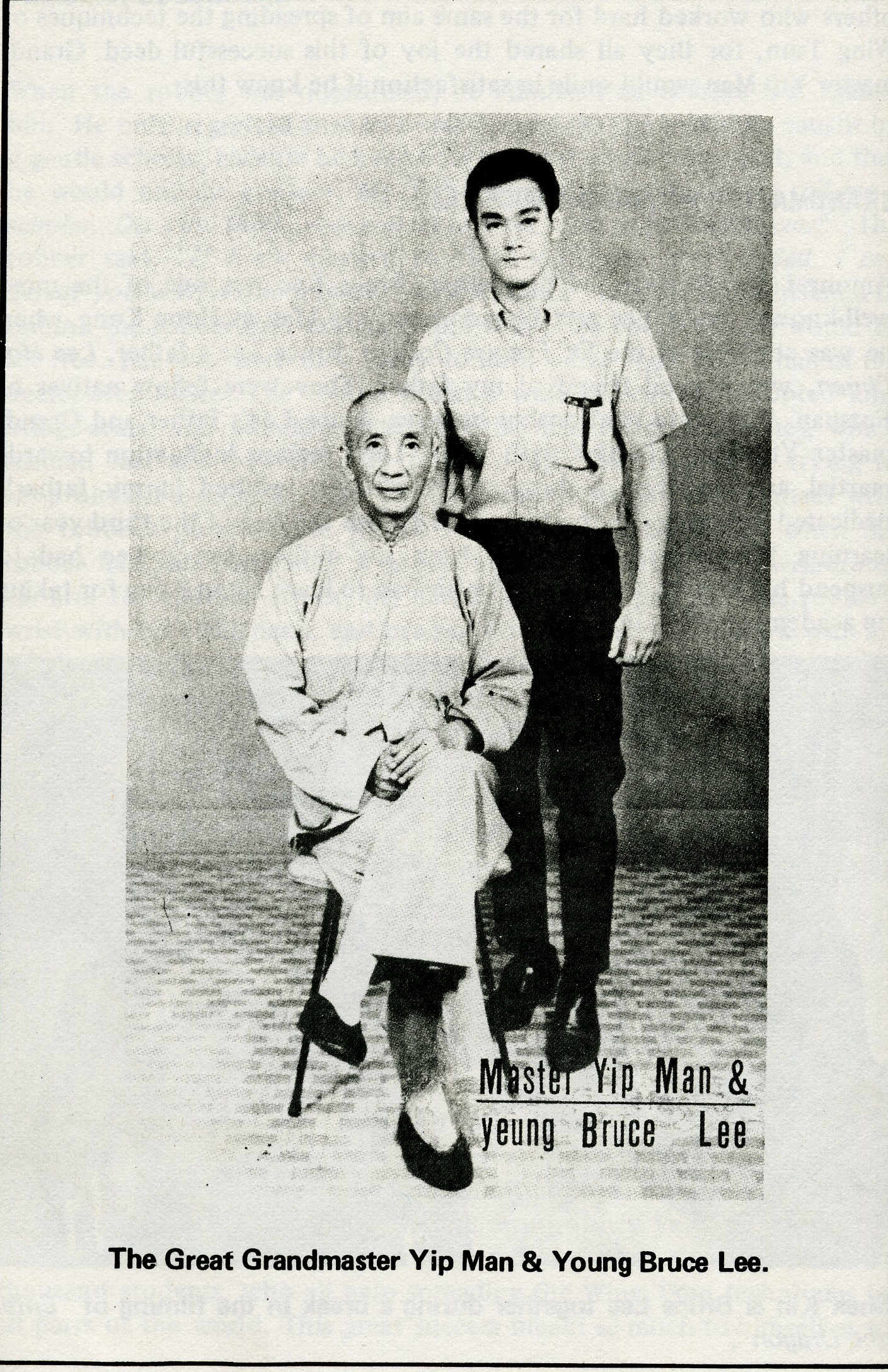
Sifu Wong Long with Grandmaster Yip Man
.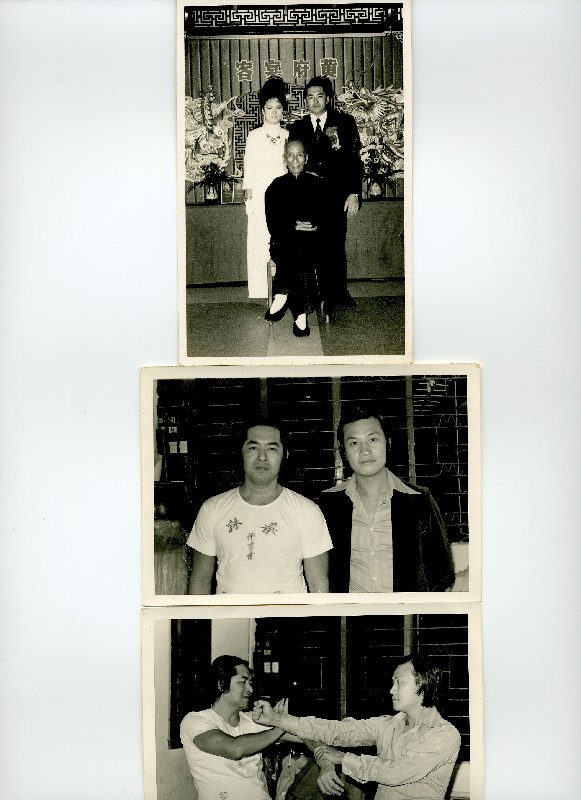
Sifu Tom Lo with his Sifu Wong Long |
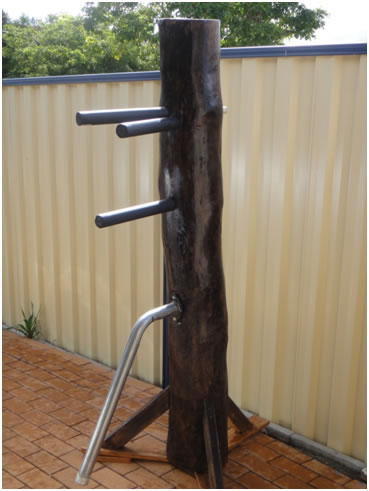
Wooden Dummy Available Now in Australia
Standard Size & Colour Height 170cm ( 5' 7" ) with Round Log
Approx. 20cm ( 8" ) width
* Free Standing easily to be placed in any corner of a small room.
* Galvanised steel arms & legs
* Strong timber log can be painted with all different colour (Chocolate, Jarrah or Satin Varnish)
* One week notice for placing a new order.
* Delivery can be arranged in all Brisbane area ( min. $30 fee will be charged for outside
5 km of CBD in Brisbane )
* Affordable prices from total cost $700 for Brisbane Area. Shipping and handling fees will be charged to interstate.
|






 Mob
: 0418 783 783
Mob
: 0418 783 783